
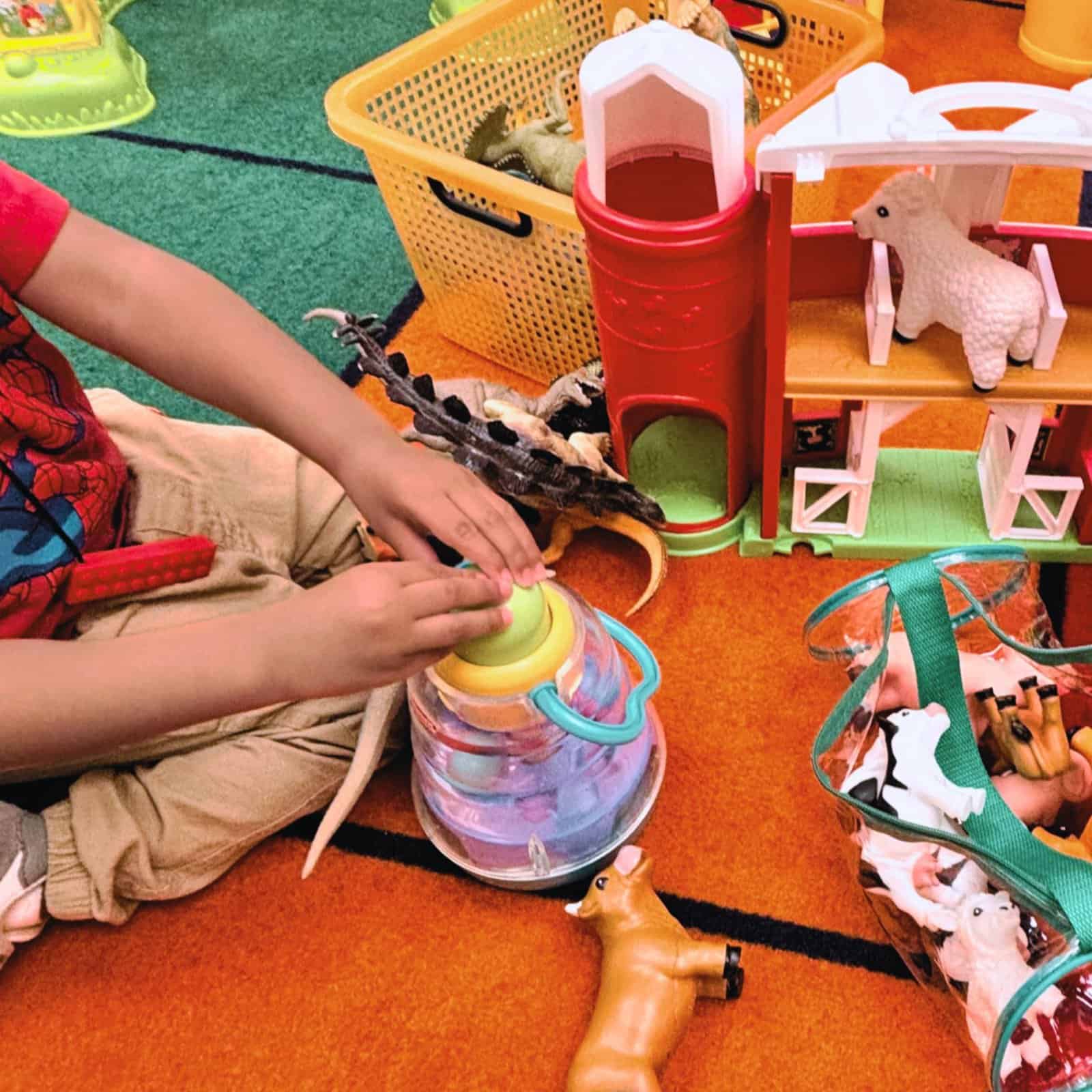
Here’s something most parents don’t hear enough: you don’t need to become a speech therapist to help your toddler communicate. No complicated programs, no perfect routines—just simple, realistic strategies you can use in the middle of your everyday life.
Here are 14 simple, everyday ways to help your child communicate more effectively. No extra toys needed, no worksheets to print—just strategies you can use in your daily routines at home.
Don’t worry—you don’t have to do all of these at once. Start with one or two and build from there.
 1. Self-Talk
 1. Self-Talk
Describe what you are doing while your child is watching
Example:
“I’m cutting the apple.”
“Cut, cut.”
“Yum apple!”
Why it helps:
Your child hears words paired with actions, making them easier to understand and use.
2. Increase Opportunities
Create small moments where your child needs to communicate to get what they want
Example:
Hold a snack container closed and wait.
They may point, reach, or try a word like “open.”
Why it helps:
More opportunities = more chances to practice communication.
3. Add an Extra Word
Expand what your child says by adding one word
Example:
Child: “Car”
You: “Fast car”
Why it helps:
It models the next step in language without overwhelming them.
4. Simplify Your Language
Use short, simple phrases
Example:
“Shoes on” instead of a longer sentence.
Why it helps:
Simple language is easier to understand and copy.
5. One at a Time
Focus on one word or idea at a time
Example:
“Ball”
“Roll ball”
“Ball stuck”
Why it helps:
Keeps learning clear and manageable.
6. Use Visuals
Pair words with gestures or objects.
Example:
Hold up milk and say “Milk.”
Why it helps:
Visuals make language easier to understand.
7. Be Silly
Use playful, unexpected actions
Example:
Put a shoe on your hand and react playfully.
Why it helps:
Fun moments motivate communication.
8. Give Two Choices
Offer two clear options
Example:
“Apple or banana?”
Why it helps:
Makes it easier for your child to respond.
9. Pause and Wait
Give your child time to respond
Example:
“Ready… set…” (pause)
Why it helps:
Extra time helps toddlers process and respond.
10. Be Forgetful
Pretend to forget something
Example:
Give yogurt but no spoon.
Why it helps:
Encourages your child to communicate a need.
11. Parallel Talk
Describe what your child is doing
Example:
“Stack”
“Big tower!”
Why it helps:
Connects language to their actions.
12. Use Verbal Routines
Repeat phrases during routines
Example:
“Ready… set… GO!”
Why it helps:
Predictability helps language stick.
13. Use Repetition
Repeat words over and over during play or daily routines
Example:
While playing with a toy car:
“Honk honk!”
“Move, move, move!”
Why it helps:
Hearing the same words repeatedly helps toddlers recognize them and feel confident trying them out themselves.
14. Make Comments
Instead of quizzing your child with questions, focus on making simple comments about what you see or what’s happening
Example:
“Wow, a big dog!”
“The ball is rolling!”
Why it helps:
Comments reduce pressure, model natural language, and give your child words to copy without feeling like a test.
Supporting your toddler’s communication doesn’t have to be complicated or time-consuming. The small moments you’re already sharing every day—meals, playtime, getting out the door—are full of opportunities to help your child learn to communicate.
Start small. Pick one or two strategies that feel doable, and build from there. Consistency matters more than perfection.
