
Moo, Beep, Pop! How Little Sounds Build Early Communication
Before children begin using words like more, mommy, or go, they learn to communicate by listening, watching, experimenting with sounds, and interacting with others. Sounds like moo, beep-beep, uh-oh, and pop! may seem simple, but they create meaningful opportunities to explore communication, connect sounds with experiences, and develop early language skills.
The best part? Everyday play and routines provide countless opportunities to practice these skills at home.
1. What Types of Sounds Count?
Early sound development includes a variety of vocalizations and sound effects children hear, explore, imitate, and eventually use to communicate.
- Animal sounds: Moo, woof, meow, quack, buzz.
- Environmental sounds: Ding-dong, splash, tick-tock, ring-ring.
- Vehicle sounds: Vroom, beep-beep, choo-choo, honk.
- Exclamations: Uh-oh, wow, yay, oops, whee!
- Play and action sounds: Pop, crash, boing, knock-knock.
Children also experiment with cooing, squealing, raspberries, and babbling, such as ba-ba-ba. These are important vocal-development skills, even when they do not represent recognizable words or sounds.
2. Why Are These Little Sounds Important?
They connect sounds with meaning. When a child hears moo while playing with a cow, they begin connecting the sound with an object or experience. Research suggests that sound-imitating words, known as onomatopoeia, can support early word learning.
They encourage vocal exploration. Playful sounds give children opportunities to listen, experiment with their voices, and practice imitation without the pressure of producing conventional words perfectly.
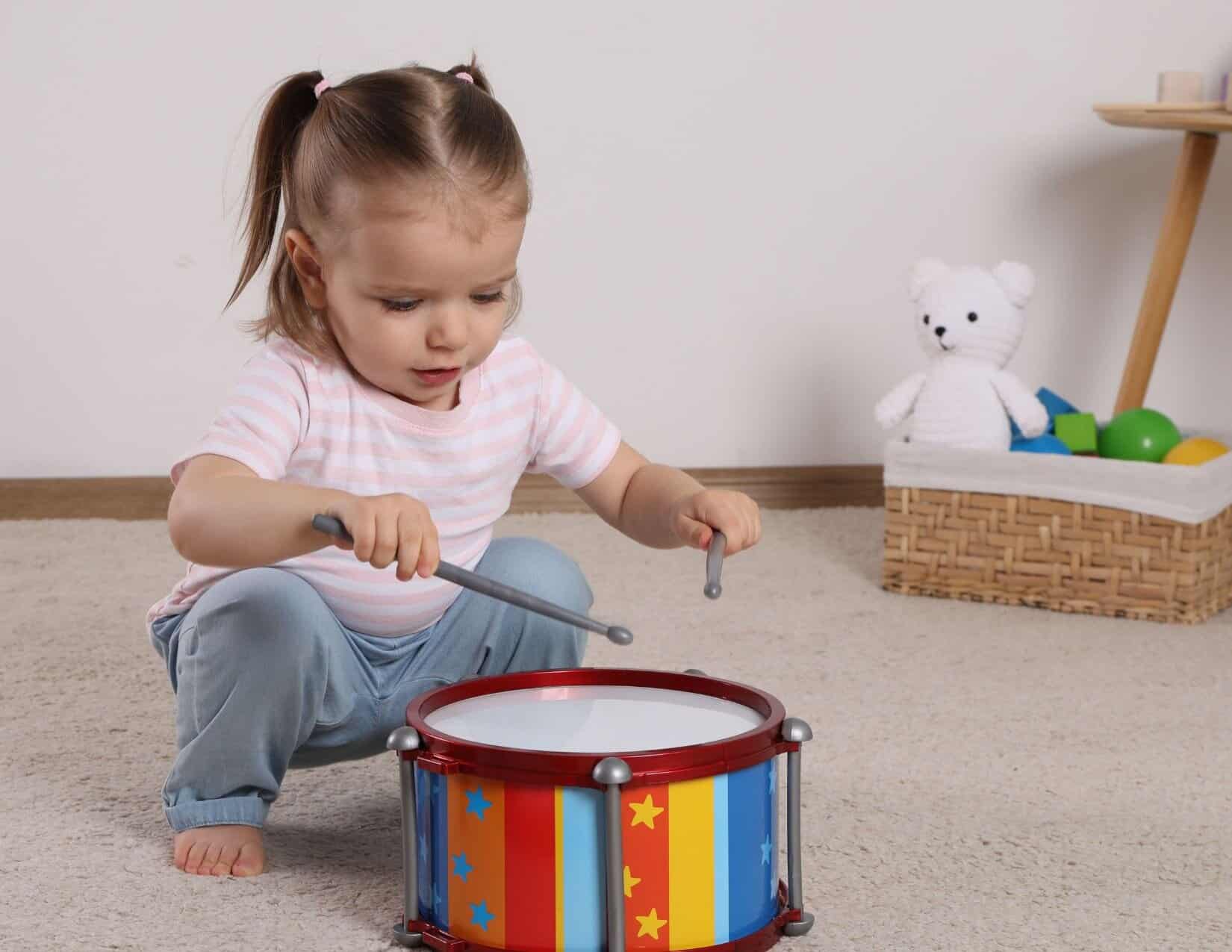
They build back-and-forth communication. Taking turns making sounds, rolling cars, or popping bubbles helps children learn that communication involves responding to others and influencing what happens next.
They make learning engaging. Familiar, enjoyable activities provide natural opportunities to hear and explore sounds repeatedly. The goal is not to demand imitation, but to create meaningful opportunities for communication.
3. How Do Little Sounds Fit Into Language Development?
Early sounds support several connected areas of language development. Children begin by noticing and understanding sounds, then explore their voices and practice imitation. Over time, they may use sounds like moo, vroom, or uh-oh to express messages, connect experiences with meaning, and participate in back-and-forth interactions. These playful sounds also create opportunities to introduce vocabulary and expand language into short phrases. Every child develops differently, and sound imitation is not a requirement for learning words. Instead, these sounds are one of many ways to encourage communication and support growing language skills.
 4. How to Support Early Sounds at Home
 4. How to Support Early Sounds at Home
You don’t need special toys or structured lessons. Build sound opportunities into activities your child already enjoys.
Follow your child’s interests
- Cars: “Vroom! Go, car!”
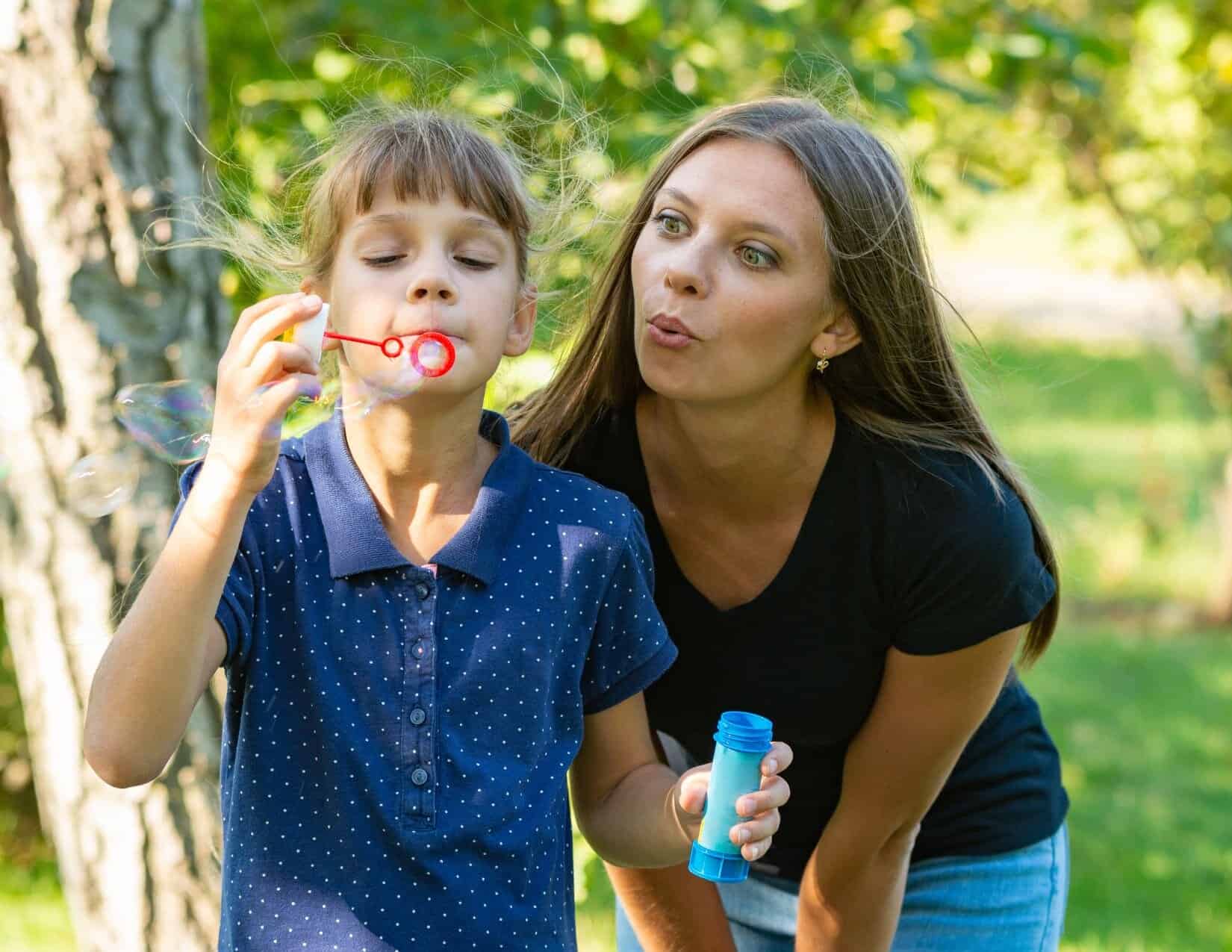
- Bubbles: “Pop! Pop!”
- Blocks: “Up, up… crash!”
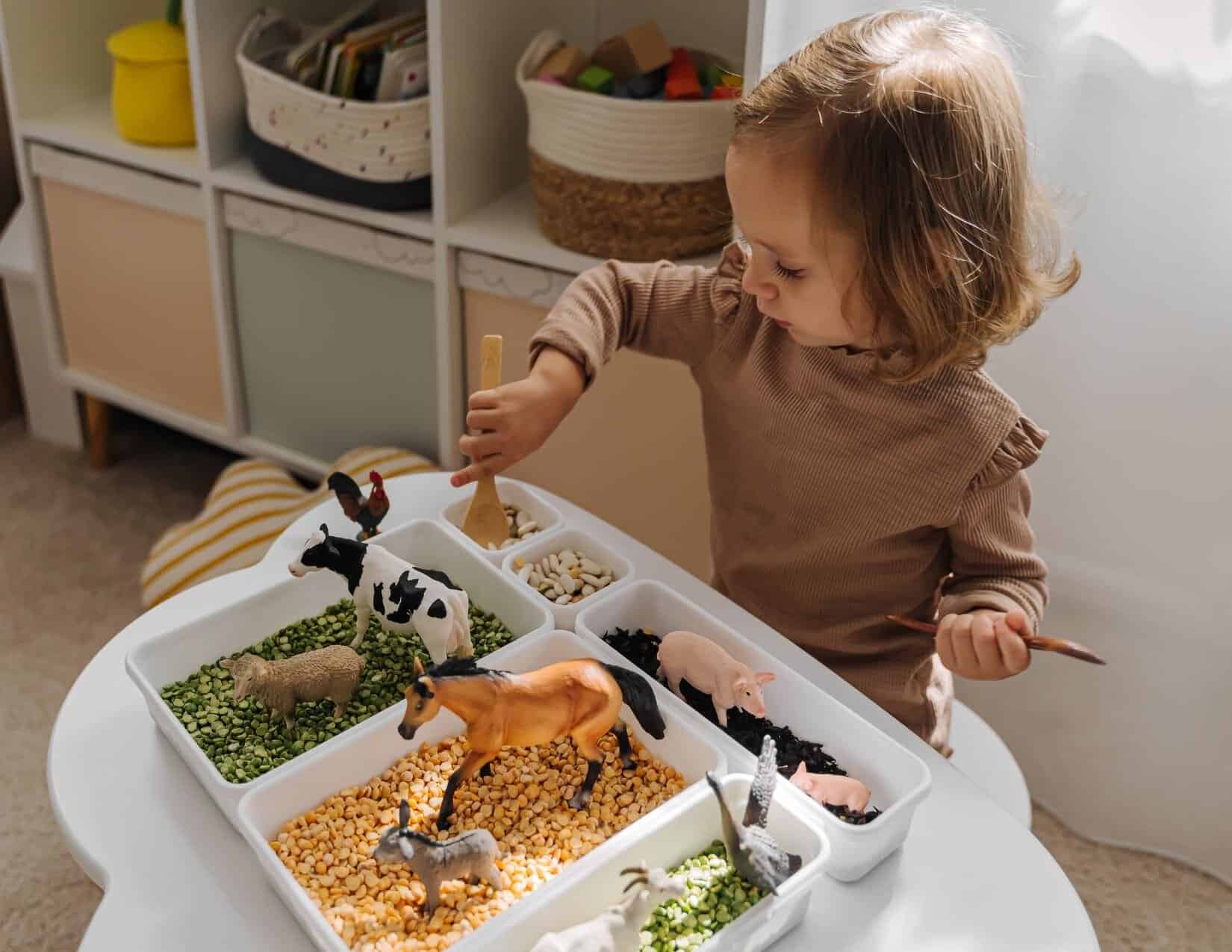
- Animals: “Moo! The cow!”
Model sounds naturally
Pair sounds with actions and objects. When something falls, say “Uh-oh! Down!” When a car moves, say “Vroom! The car goes!”
Pause and give your child time
After modeling a sound, pause to let your child participate. They might vocalize, gesture, point, smile, or look toward you. All these responses can be meaningful.
Celebrate approximations
If your child says “buh” while playing with bubbles, respond with “Pop! Pop the bubbles!” Acknowledge their attempt and continue playing rather than correcting their production.
Expand sounds into phrases
Build on your child’s communication with simple language:
- “Moo!” → “Big cow!”
- “Vroom!” → “Car go!”
- “Uh-oh!” → “Uh-oh, it fell!”
Make routines interactive
Use sounds while reading books, getting dressed, washing hands, or playing peekaboo. Repeated routines help children anticipate what comes next and provide opportunities to participate.
Accept all forms of communication
Children may communicate through sounds, gestures, signs, facial expressions, or augmentative and alternative communication (AAC). Continue modeling speech while respecting every communication method. Never require a child to produce a sound before receiving an object or participating in an activity.
A Little Sound Goes a Long Way
You don’t have to turn every moment into a lesson. Follow your child’s lead, model sounds during everyday activities, and respond warmly to their attempts.
A simple moo, beep, or uh-oh can create opportunities to connect, take turns, and attach meaning to experiences. Little sounds are not the whole of language development, but they can be a meaningful part of the journey.
Research and Further Reading
- American Speech-Language-Hearing Association (ASHA): Communication Milestones: Birth to 1 Year and 13 to 18 Months.
- Motamedi et al. (2021). Linking language to sensory experience: Onomatopoeia in early language development. Developmental Science, 24(3), e13066. Read the research.
- Kuhl & Meltzoff (1996). Infant vocalizations in response to speech: Vocal imitation and developmental change. The Journal of the Acoustical Society of America, 100(4), 2425–2438. Read the research.
A note for parents: Children develop communication skills at different rates. Sound imitation is not a required step before words, and gestures, signs, and AAC are valid forms of communication. If you have concerns about your child’s communication or hearing, consult your pediatrician or a speech-language pathologist.
